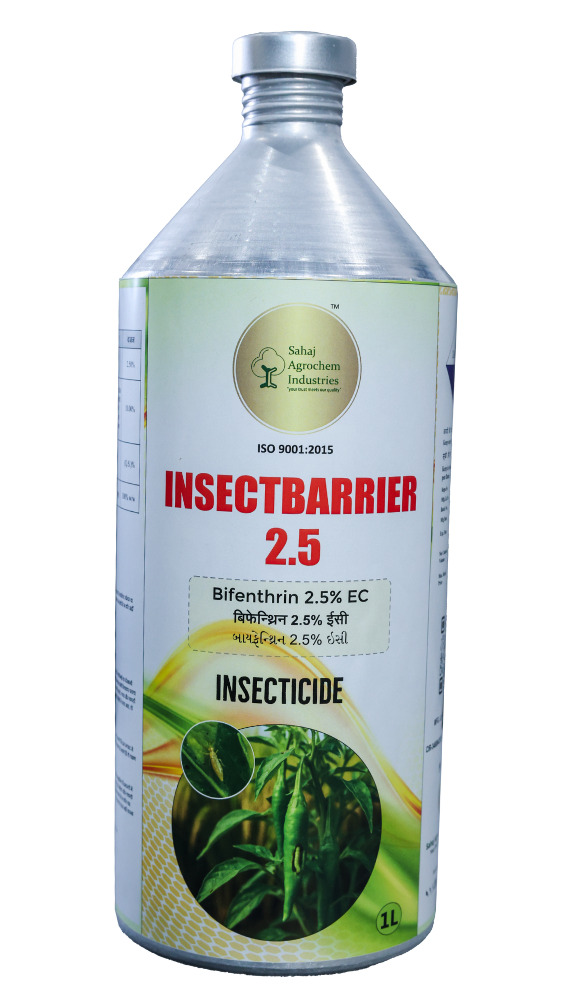
About Bifenthrin 2.5% EC
Experience a first-class solution for crop protection with Bifenthrin 2.5% EC, a matchless emulsifiable concentrate formulated for rapid eradication of pests. This preeminent insecticide acts as both a contact and stomach poison, disrupting the nervous system of aphids, bollworms, and other notorious insects. Highlighted by its markdown in toxicity to mammals and distinguished solubility in organic solvents, it forms a stable emulsion in water. Avail a special rate and preserve quality crops-suited for cotton, fruits, vegetables, cereals, and ornamentals. With a shelf life of 2 years, rest assured of durability and efficacy.
Outstanding Features & Versatile Applications
Bifenthrin 2.5% EC is specially highlighted for its quick action and matchless efficacy against a wide spectrum of pests, including both sucking and chewing insects. Its extra features include high solubility in organic solvents and ease of emulsification in water. Suitable for use on cotton, vegetables, fruits, cereals, and ornamentals, it delivers first-class pest management. The application method is straightforward, ensuring effective deployment on various crop types for preeminent pest control results.
Reliable Packaging & Timely Delivery
Packaged in durable HDPE bottles of 100 ml, 250 ml, 500 ml, 1 L, and 5 L to suit every scale of agricultural need, Bifenthrin 2.5% EC is supplied with careful attention to quality preservation. Orders are processed promptly, ensuring the product is delivered to your door ahead of the expected arrival. Customize your payment terms according to convenience to streamline the purchase process, fostering smooth transaction experiences for distributors, exporters, suppliers, and traders across India.
FAQ's of Bifenthrin 2.5% EC:
Q: How should Bifenthrin 2.5% EC be applied to crops?
A: Bifenthrin 2.5% EC should be diluted at a rate of 200-250 ml per acre in water and thoroughly sprayed onto the affected crops using standard spraying equipment to target pests effectively.
Q: What are the key benefits of using Bifenthrin 2.5% EC?
A: The main benefits include matchless pest control, quick release action, and broad-spectrum efficacy against aphids, whiteflies, thrips, bollworms, and other prevalent agricultural pests-ensuring healthier and more productive crops.
Q: Where can Bifenthrin 2.5% EC be safely used?
A: It is suitable for use on a variety of crops such as cotton, vegetables, fruits, cereals, and ornamentals, making it a versatile choice for diverse agricultural and horticultural settings.
Q: What is the recommended storage process for Bifenthrin 2.5% EC?
A: To maintain shelf life and potency, Bifenthrin 2.5% EC should be stored in its original, unopened container in a cool, dry place away from direct sunlight and heat sources.
Q: When should the product be applied for best results?
A: Apply Bifenthrin 2.5% EC during early infestation or as soon as pest activity is detected for optimal and first-class control. Always follow local agricultural guidelines for timing and frequency.




 Send Inquiry

 Send Inquiry


